
Gamification: Turning Data Purchases into Daily Habits
What worked, what had mixed results, and what we learned from running in-app games that reached over 175 million plays.
Turning a monthly utility into a daily habit through game loops.
1. Challenges
- Balancing different business goals: Our teams needed different things. Commercial leadership wanted users to buy data packs to grow average revenue (ARPU), while our growth squads focused on daily active users (DAU).
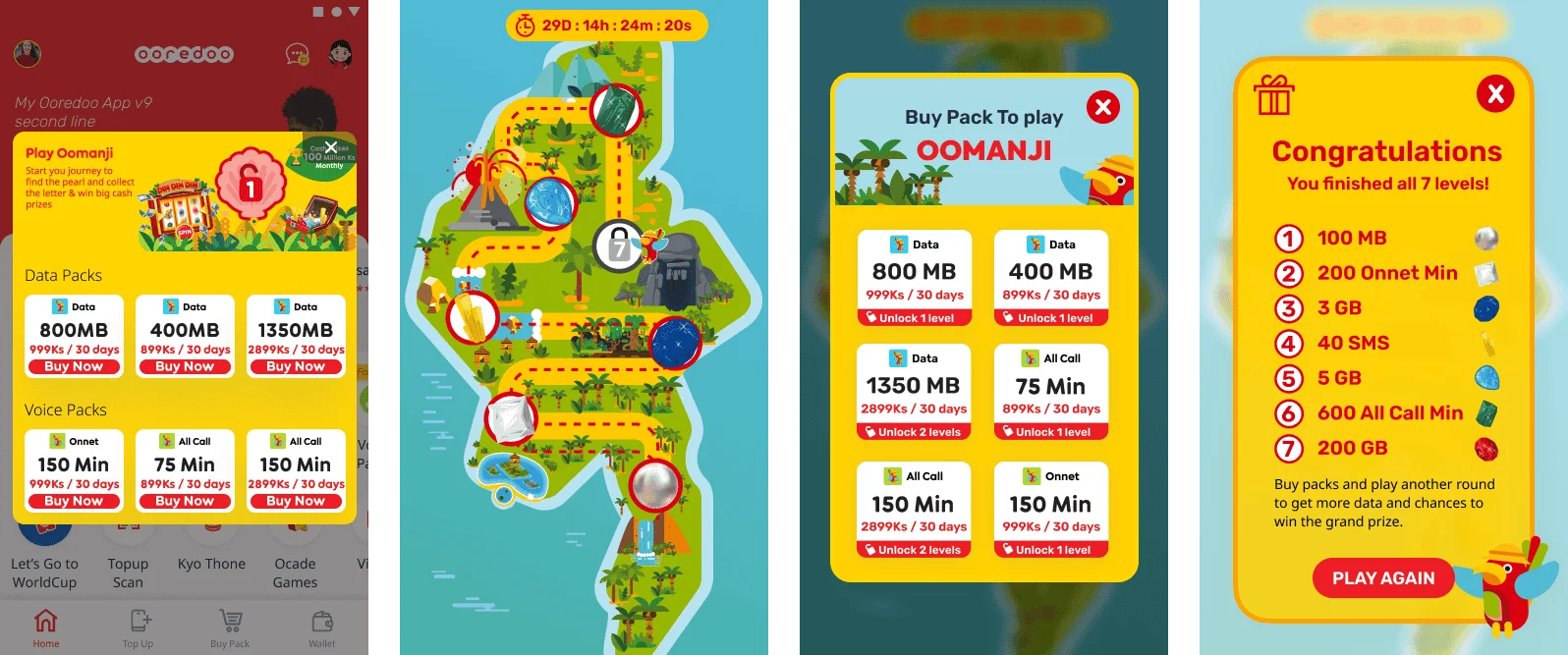
- Mid-game drop-off: In our main 7-stage game (Oomanji), players unlocked stages by buying data packs. Many players gave up around Levels 3 and 4 because the requirements felt too steep and repetitive.
- Growing complexity: As new campaign ideas were added over time, rules and prize conditions became complicated. Our challenge was keeping the screens simple and easy to understand.
- Hiding slow network lag: Games needed to feel snappy and fun, even when backend telecom billing checks took several seconds to confirm a purchase.
2. Impact
- 175M+ total plays: Over 150 million gameplays were officially recorded in the 2022 Group Annual Report, eventually passing 175 million plays across campaigns.
- Strong data pack sales: Tying game progression directly to data packs gave users a fun reason to top up, driving massive digital pack purchases across the user base.
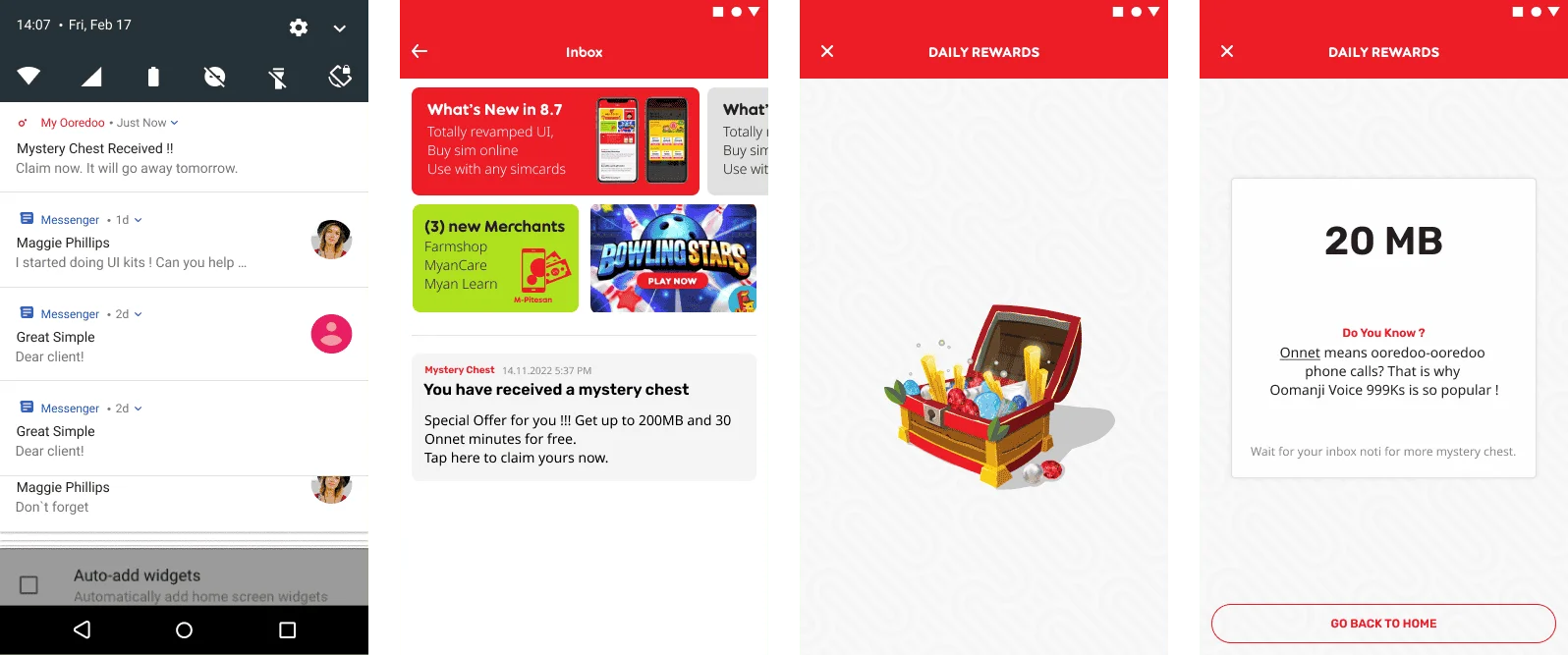
- High daily engagement: Peak campaigns saw millions of daily reward interactions, turning a balance-checking utility into a daily habit.
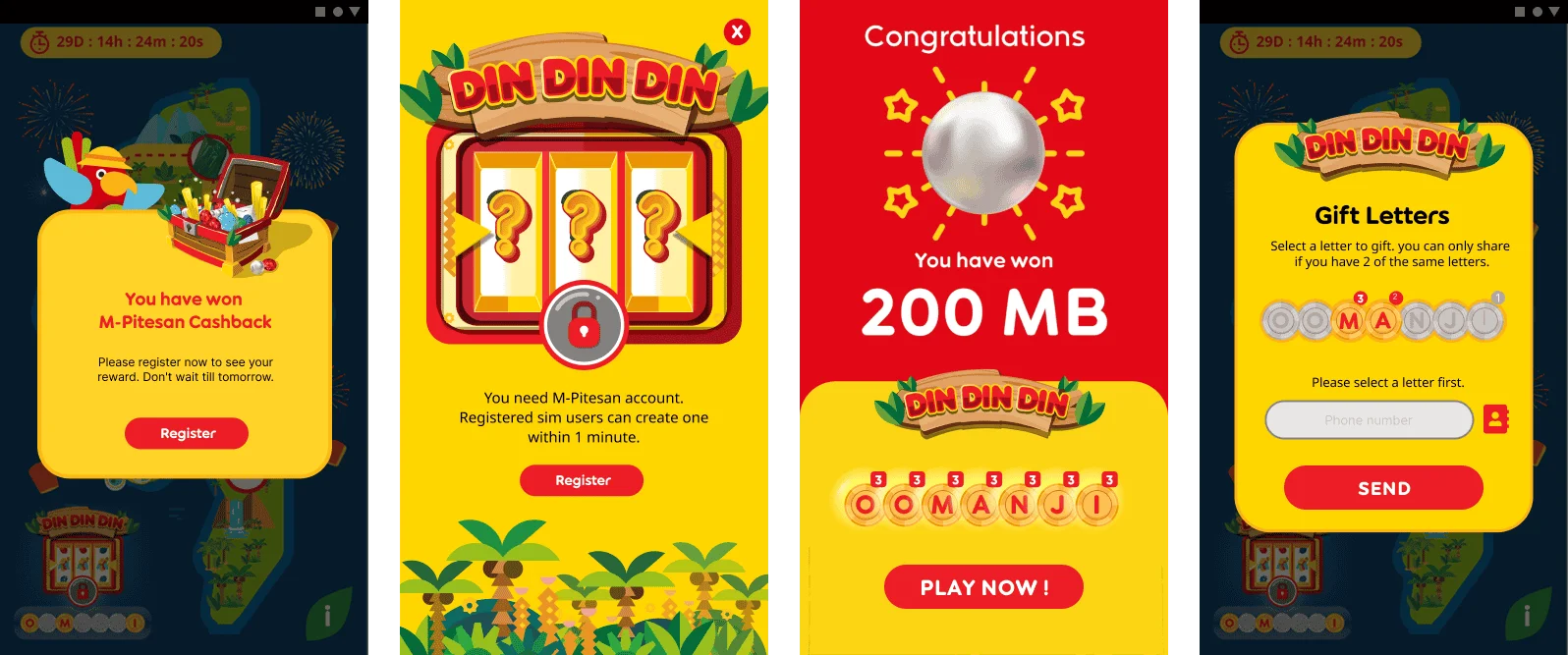
- Cross-team adoption: Successful game mechanics were reused by the mobile wallet team to reward wallet cashback and encourage digital payments.
3. What I Did
This was a shared achievement across our entire squad. While our Product Owner managed strategy and stakeholder goals, and partner teams handled 3D art, audio, and probability math, my focus was on the UX, user flows, and player progression:
- Progression Curve Design: In our flagship 7-stage game, I redesigned the progression curve to smooth out the difficult transition at Levels 3 and 4. I made Level 7 a pure celebration and reward stage with no hurdles, keeping players excited to finish.
- The Sequel & Wallet Tie-In: Following the game’s initial success, I worked with the team on a sequel that added new mechanics and connected rewards directly to mobile wallet cashback.
- Daily Habit Loops (DAU): Designed simple, low-friction daily interactions (like daily lucky boxes and tap rewards) so users could collect fun rewards every morning without spending money.
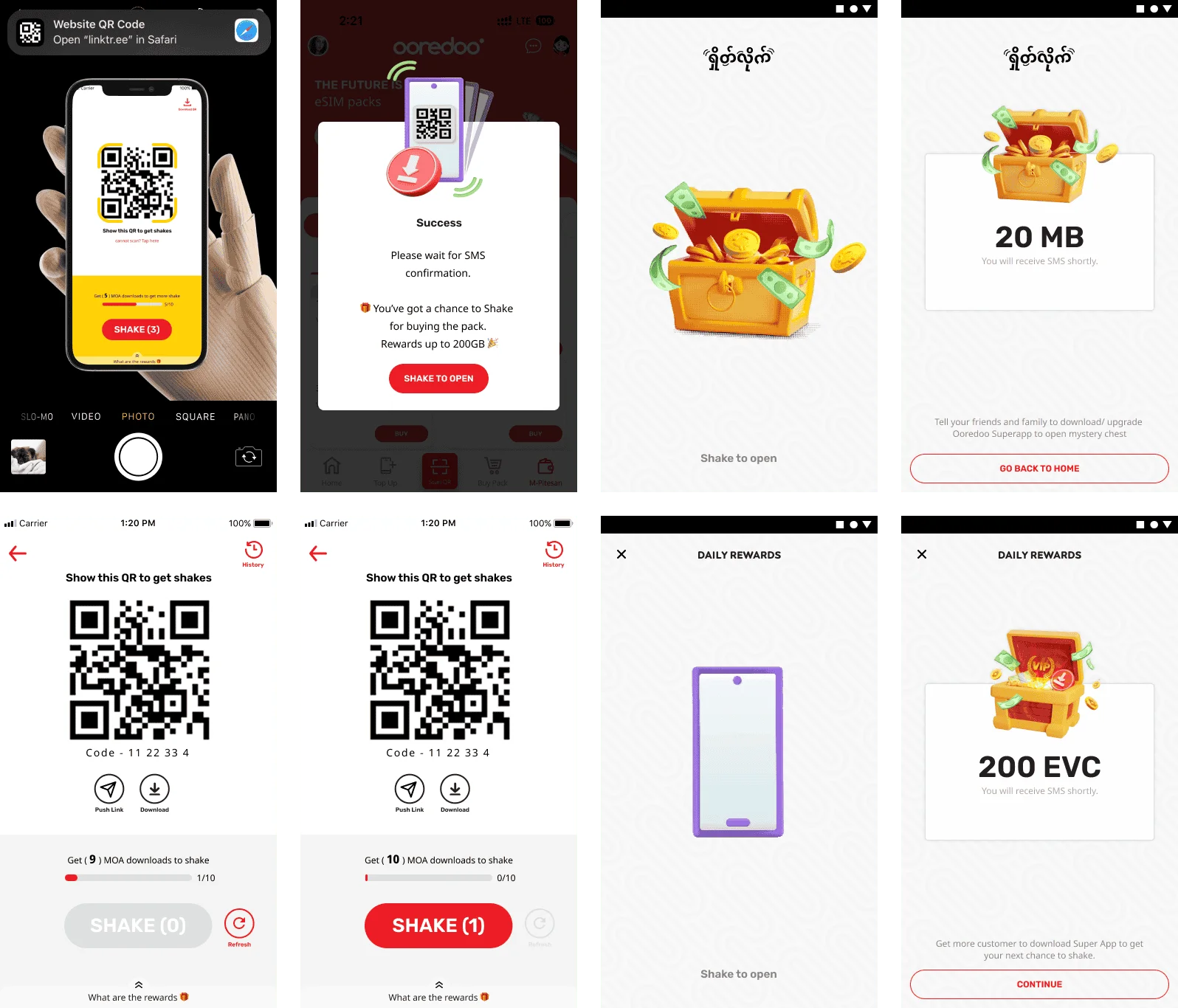
- Conversion Experiments: Designed seasonal campaign flows (like card shuffles and shake-to-win) to engage new users, helping the team learn which mechanics drove real retention and which had diminishing returns.
- Knowing What to Build: When an ambitious all-in-one game concept proved too complex and costly to build, our team made the call to set it aside and focus on simpler, proven mechanics.
- Masking Telecom Latency: Created playful animations and clear loading states so players never felt frozen while telecom billing processed in the background.
4. Additional Showcase
Related Deep-Dives
 Sep 15, 2026
Why Custom Apps Cost More Than People Expect
Understanding the real costs behind building software: team salaries, the challenge of building alone, and why an app is an ongoing commitment.
 Sep 15, 2026
Mobile App vs. Web App: What Founders Need to Know
Understanding the real differences between an app you download from the store and an app that runs in your browser.
 Aug 15, 2025